1. Electronics Tools
  2. Wire Gauge Calculator

Wire Gauge Calculator

Convert AWG to mm² (and back), pick the smallest wire for a current over a run without too much voltage drop or heat, and size a PCB trace with IPC-2221.

AWGmm²
AWG

Type 30 to 4/0 (also 00, 0000). Smaller numbers are thicker wires.

Conductor

Aluminium conducts about 61 % as well as copper, so the same current needs roughly 1.6× the area.

The wire, to scale between gauges

Ø 1.02 mm0.823 mm²18 AWG16 strands

Jacket cut away to show the strands; the end view grows with the gauge.

18 AWG is

0.823mm²

Nearest metric: 0.75 mm²Same or thicker: 1 mm²

Results

Diameter
1.02 mm · 40.3 mil
Cross-section
0.823 mm² · 1 624 cmil
Resistance (copper, 20 °C)
20.9 Ω/km
Conductor weight
7.37 g/m
Typical stranding
16/30 · Ø 0.25 mm
Single wire in free air
16 A

Ratings are typical values — the insulation, bundling and your local code set the real limit.

As a flexible cord, 1 mm² is usually rated 10 A.

Gauge and ampacity table

Tap a row to load it. Your pick is highlighted.

AWGmm²Ø mmΩ/kmIn free airConduit 60/75/90 °C≈ mm²
300.05090.2553390.86 A—0.14
280.0810.3212131.4 A—0.14
260.1290.4051342.2 A—0.14
240.2050.51184.23.5 A—0.25
220.3260.644537 A—0.34
200.5180.81233.311 A—0.5
180.8231.0220.916 A—0.75
161.311.2913.222 A—1.5
142.081.638.2832 A15 / 20 / 25 A2.5
123.312.055.2141 A20 / 25 / 30 A4
105.262.593.2855 A30 / 35 / 40 A6
88.373.262.0673 A40 / 50 / 55 A10
613.34.121.3100 A55 / 65 / 75 A16
421.25.190.815140 A70 / 85 / 95 A25
326.75.830.646160 A85 / 100 / 115 A25
233.66.540.513180 A95 / 115 / 130 A35
142.47.350.407210 A110 / 130 / 145 A50
1/053.58.250.322250 A125 / 150 / 170 A50
2/067.49.270.256280 A145 / 175 / 195 A70
3/08510.40.203330 A165 / 200 / 225 A95
4/010711.70.161380 A195 / 230 / 260 A120

Copper at 20 °C (aluminium: 0.78× the current). In free air = one wire in still air (chassis wiring). Conduit = NEC 310.16, 30 °C ambient. Flexible cord = IEC 60227. Fixed = IEC 60364 method C, two loaded conductors. Bundles and hot enclosures need lower values.

How it was calculated

  1. Ø

    d = 0.127 mm × 92^((36 − n) / 39)

    = 0.127 × 92^((36 − 18) / 39) = 1.024 mm

  2. A

    A = π/4 × d²

    = π/4 × 1.024² = 0.823 mm²

  3. R

    R' = ρ ÷ A (ρ Cu = 1.72×10⁻⁸ Ω·m)

    = 1.72×10⁻⁸ ÷ 0.823×10⁻⁶ = 20.9 Ω/km

Presets
A
m

Distance to the load. The return wire is counted too (× 2).

V
%

At most 360 mV lost in the wire.

Conductor

Supply, wire pair and load

5 m × 2 = 10 m+−12 VLOAD11.7 V−272 mV (2.3 %)12 AWG

Current flows out on red and back on black. Heat is estimated for one wire in still air at 30 °C.

Smallest wire

12AWG

or 4 mm²Sized by the voltage drop.

Results

Voltage drop
272 mV · 2.3 %
Voltage at the load
11.7 V
Power lost in the wire
1.36 W · 2.3 %
Wire resistance (both ways)
54.4 mΩ
Wire temperature
≈ 31.1 °C
Margin to 60 °C
29 °C

Within the drop and comfortably cool.

Fuse each positive wire close to the battery or supply, rated for the wire, not for the load.

AWG or metric, side by side

The smallest size of each system that passes both checks.

12 AWG

Voltage drop
2.3 %
Power lost in the wire
1.36 W
Wire temperature
31.1 °C

4 mm²

Voltage drop
1.9 %
Power lost in the wire
1.12 W
Wire temperature
30.9 °C

Find it in the shop

  • 12 AWG wire
  • Silicone wire
  • Cables

How it was calculated

  1. Rmax

    Rmax = V × drop% ÷ I

    = 12 V × 3 % ÷ 5 A = 72 mΩ

  2. Amin

    Amin = ρ × 2L ÷ Rmax

    = 1.72×10⁻⁸ Ω·m × 2 × 5 m ÷ 72 mΩ = 2.39 mm²

  3. T

    Heat check: thinnest size that stays under 60 °C in free air

    = 12 AWG → ≈ 31.1 °C

  4. ΔV

    ΔV = I × R(2L)

    = 5 A × 54.4 mΩ = 272 mV

  5. P

    P = I² × R

    = 5² × 54.4 mΩ = 1.36 W

A
°C

How much hotter than the board the trace may get. 10 °C is the usual conservative choice.

Copper weight

Layer

mm

Trace on the board

0.788 mm · 31 mil2 A · ΔT 10 °COuter layer35 µm

From above, then cut through the board edge. Inner layers cannot shed heat to the air.

Minimum trace width

0.788mm

31 mil

Results

Width
0.788 mm · 31 mil
Copper cross-section
42.4 mil² · 0.0274 mm²
Copper thickness
34.7 µm (1 oz)
Resistance over 50 mm
33.4 mΩ
Voltage drop
66.7 mV
Heat in the trace
133 mW

A comfortable trace for this current.

IPC-2221 is conservative for outer layers; the newer IPC-2152 often allows narrower traces, especially with nearby planes.

What common widths carry

With 1 oz copper and a 10 °C rise. Green ones carry your current.

  • 0.15 mm

    601 mA

  • 0.2 mm

    740 mA

  • 0.25 mm

    870 mA

  • 0.3 mm

    993 mA

  • 0.4 mm

    1.22 A

  • 0.5 mm

    1.44 A

  • 0.8 mm

    2.02 A

  • 1 mm

    2.38 A

  • 1.5 mm

    3.19 A

  • 2 mm

    3.93 A

  • 3 mm

    5.27 A

  • 5 mm

    7.63 A

How it was calculated

  1. A

    A = (I ÷ (k × ΔT^0.44))^(1/0.725) k = 0.048

    = (2 ÷ (0.048 × 10^0.44))^1.379 = 42.39 mil²

  2. w

    w = A ÷ t

    = 42.39 ÷ 1.37 mil = 31.03 mil = 0.788 mm

  3. R

    R = ρ(T) × L ÷ (w × t)

    = ρ(35 °C) × 50 mm ÷ (0.788 × 0.0347 mm) = 33.4 mΩ

  4. ΔV

    ΔV = I × R

    = 2 A × 33.4 mΩ = 66.7 mV

Good to know

Count both wires

Current goes out and comes back, so the drop is over twice the distance. A 5 m run to an LED strip is 10 m of wire.

Bundles run hot

Free-air ratings assume one wire alone. In a loom, conduit or closed box, derate by 30–50 % or go up a size.

Stranded for anything that moves

Solid wire cracks when flexed. Use fine-stranded or silicone wire on robots, drones and battery leads, and crimp or tin the ends.

Mains is a different job

230 V wiring follows the electrical code: cable type, breaker and installation method. Ask a qualified electrician.

Why wire size matters

Every wire is a small resistor. Too thin, and it wastes voltage the load needed and turns it into heat: LED strips dim at the far end, motors stall, and in the worst case the insulation melts. AWG numbers go down as wires get thicker (every 3 gauges doubles the area); metric sizes give the copper area directly in mm². Pick the larger of what the voltage drop and the heat allow.

How to choose a wire size

How the wire size is calculated

A ≥ ρ × 2L × I / (V × drop%)

AWG is a logarithmic scale: the bare diameter is d = 0.127 mm × 92^((36 − n)/39), so every 6 gauges halve the diameter and every 3 gauges halve the area. 18 AWG is 1.02 mm and 0.82 mm², 12 AWG is 3.31 mm². Metric cable is sold by its area directly: 0.75, 1.5, 2.5, 4, 6 mm²…

A wire’s resistance is R = ρ × length / area, with ρ = 1.72×10⁻⁸ Ω·m for copper (aluminium 2.82×10⁻⁸). Because the current goes out and back, the length is twice the distance to the load. The calculator finds the thinnest wire whose drop ΔV = I × R stays within your limit.

It then checks heating: the power I² × R warms the wire until convection and radiation carry it away. The size must keep the conductor under 60 °C in still 30 °C air; if that needs a thicker wire than the drop does, heat sets the size.

For PCB traces, IPC-2221 gives I = k × ΔT^0.44 × A^0.725 with the cross-section A in mil², k = 0.048 for outer layers and 0.024 for inner ones. Dividing the area by the copper thickness (35 µm per oz) gives the width.

Worked example: a 12 V LED strip 5 m away

A 12 V LED strip draws 5 A, 5 m from the power supply, and you accept a 3 % drop.

  1. Largest wire resistance allowed12 V × 3 % / 5 A = 0.072 Ω
  2. Smallest copper area (2 × 5 m of wire)1.72e-8 × 10 m / 0.072 Ω = 2.39 mm²
  3. 14 AWG is 2.08 mm²: too thindrop ≈ 0.43 V = 3.6 %
  4. 12 AWG is 3.31 mm²drop ≈ 0.27 V = 2.3 %, loss ≈ 1.4 W

Use 12 AWG or 4 mm² wire: about 11.7 V reaches the strip and the wire stays close to room temperature.

Common mistakes

  • Counting only one wire

    The return conductor has the same resistance as the positive one. Forget it and the real drop is twice what you planned.

  • Sizing a long low-voltage run by current alone

    5 A is easy for 18 AWG over half a metre, but over 5 m at 12 V it drops almost 9 %. At low voltage the drop, not the heat, usually sets the size.

  • Reading AWG backwards

    A bigger AWG number is a thinner wire: 22 AWG is for signals, 10 AWG for tens of amps. When between two sizes, take the smaller number.

  • Using free-air ratings in a bundle

    Chassis-wiring tables assume one wire alone in air. Bundled in a loom or a conduit it runs much hotter: derate or go one size up.

Frequently asked questions

Compute the diameter d = 0.127 × 92^((36 − AWG)/39) mm, then the area π/4 × d². For example 14 AWG = 1.63 mm = 2.08 mm², close to the metric 2.5 mm².

18 AWG is 0.82 mm². The nearest metric size is 0.75 mm²; if the current is close to the limit, take 1 mm², which is the same or thicker.

As a single wire in free air, about 41 A (chassis wiring). As building wire in a conduit it is rated 20–30 A depending on the insulation, and for long low-voltage runs the voltage drop limits it much sooner.

3 % is a common target for power runs and LED strips, 5 % at most for most loads. USB devices need at least 4.75 V, so a 5 V supply leaves very little room.

Yes. Aluminium has about 1.64× the resistance of copper, so you need roughly 1.6× the area for the same drop, plus terminals rated for aluminium.

With 1 oz copper on an outer layer and a 10 °C rise, IPC-2221 gives about 0.30 mm (12 mil). An inner layer needs about 0.79 mm.

Free shipping

On orders over 5000DA

Easy returns

7-day hassle-free returns

Fast checkout

payments on delivery and fast shipping

24/7 support

We're here to help

Dzduino Online Store

Eempowering engineers, students, makers, researchers, and businesses with high-quality and innovative technical solutions.

  • Sales: store@dzduino.com
  • Store: +213 550 88 88 27
  • Sales: +213 550 88 88 29
  • Support: +213 550 88 88 37
  • 043 Cite Remila (Route du Port), Tigditt - Mostaganem

Shop

  • All Categories
  • Électronique & Développement
  • Tools & Equipements & DIY
  • Téléphonie & Communication
  • Fabrication & Prototyping
  • Computers & Networks
  • Power & Energy & Solar
  • Video Surveillance & Security systems
  • Educational, Scientific and Laboratory

Support

  • Track order
  • Orders
  • Account
  • Shipping & returns
  • Shipping calculator

Company

  • About
  • Contact us
  • Site map
  • Privacy
  • Terms

Stay in the loop

New stock, maker deals, and electronics tips — straight to your inbox.

© 2026 Dzduino Electronics, All Rights Reserved

TermsPrivacyShipping & returnsSite map
CIBBARIDI MobFawriPayCash
Free express shipping on orders over 10,000DA
SpecialSaleBlogPrint & CutLabContact usToolsNewLabNew

Related products

Boards, modules, and kits that pair with this tool.

USB to RS485 - RS422 Converter- Mini PRO
DZD0006170

USB to RS485 - RS422 Converter- Mini PRO

DZD 2,000.00Out of StockOut of Stock
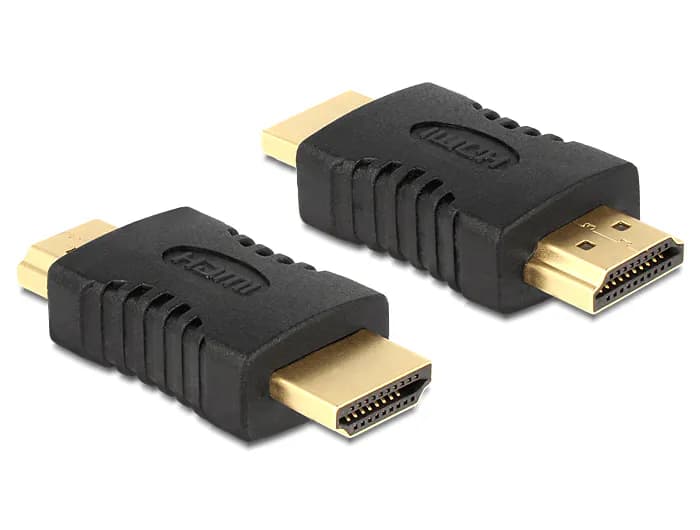
HDMI Male to HDMI male Converter
DZD0006444

HDMI Male to HDMI male Converter

DZD 450.00In StockIn Stock
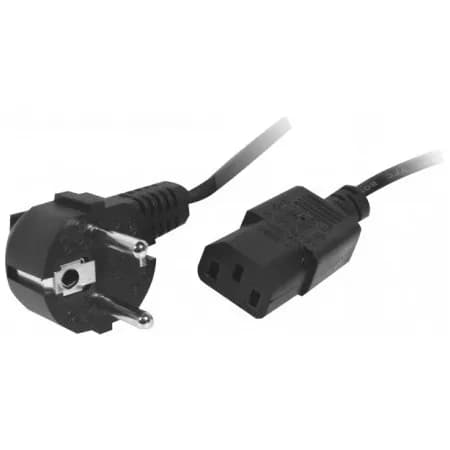
CABLE ALIMENTATION SIMPLE
DZD0006450

CABLE ALIMENTATION SIMPLE

DZD 250.00Out of StockOut of Stock
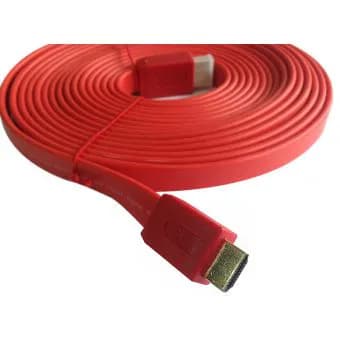
CABLE HDMI PLAT 5M
DZD0006610

CABLE HDMI PLAT 5M

DZD 700.00Out of StockOut of Stock
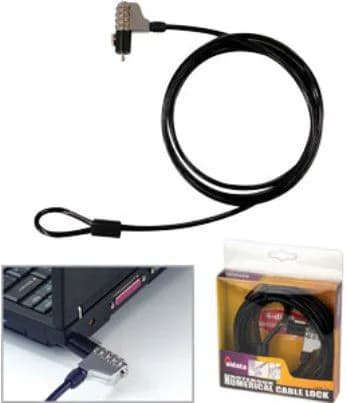
NOTEBOOK NUMERICAL CABLE LOCK
DZD0008001

NOTEBOOK NUMERICAL CABLE LOCK

DZD 1,500.00In StockIn Stock
Micro USB cable with Switch
DZD00129720

Micro USB cable with Switch

DZD 450.00In StockIn Stock
Mini Gender Changer DB15 M/M
DZD0016920

Mini Gender Changer DB15 M/M

DZD 200.00Out of StockOut of Stock
DC Splitter Cable 1 to 4 Outputs
DZD00170012

DC Splitter Cable 1 to 4 Outputs

DZD 300.00In StockIn Stock
View all