How gear ratios, servo torque and motor speed are calculated
Gear ratio, output speed and torque
i = Z driven / Z driver · n out = n in / i · T out = T in × i × η
The ratio of a gear pair is the driven gear's tooth count divided by the driving gear's: 36 / 12 = 3. For belts and pulleys use the teeth (timing belts) or the diameters. In a train of several stages the ratios multiply.
A ratio of 3:1 makes the output turn three times slower and gives it about three times the torque. Each stage loses a little power in friction: about 2–5% for good spur gears or a timing belt, so multiply by the efficiency of every stage.
For a servo the torque needed is the weight times its distance from the shaft: T = m × L × cos θ in kg·cm, worst when the arm is horizontal. Servo datasheets give stall torque, so choose one with at least 1.5× to 2× that value.
Worked example: a 3000 rpm motor through 12→36 and 15→45 gears
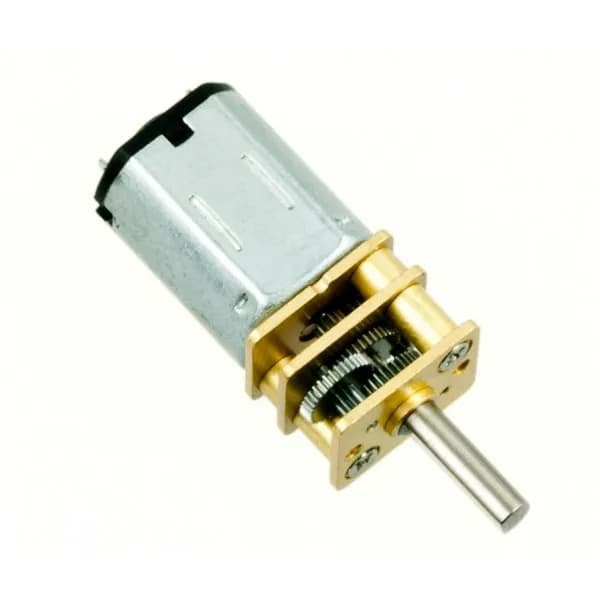
A motor turning at 3000 rpm with 0.5 kg·cm of torque drives two spur stages, 12→36 teeth then 15→45 teeth, each 95% efficient.
- Stage ratios
i1 = 36 / 12 = 3 · i2 = 45 / 15 = 3 - Total ratio
i = 3 × 3 = 9 - Output speed
n = 3000 / 9 ≈ 333 rpm - Output torque
T = 0.5 × 9 × 0.95 × 0.95 ≈ 4.06 kg·cm
The output turns at about 333 rpm with 4.06 kg·cm (0.4 N·m), in the same direction as the motor because two meshes reverse twice.
Common mistakes
Treating stall torque as working torque
A servo or motor rated 10 kg·cm stops at that load. Continuous work should stay well below it, around half for a servo and a third for a DC motor.
Forgetting the arm's own weight
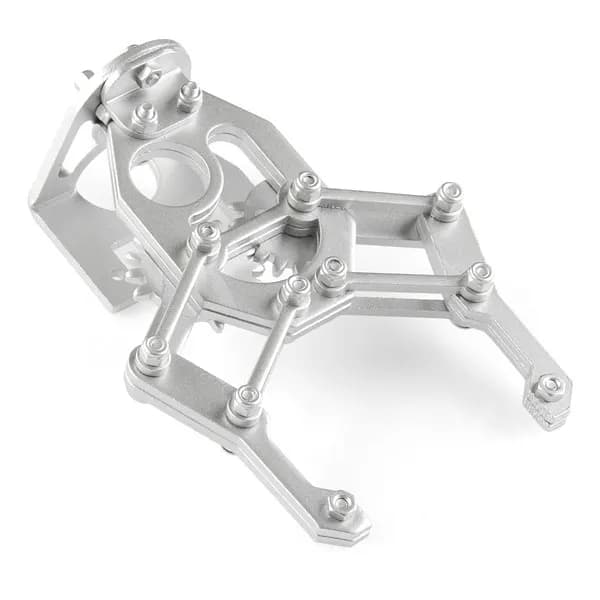
A long arm weighs something too. Its mass acts at half its length, and it adds up fast on robot arms.
One huge reduction in a single stage
Past about 6:1 per stage the pinion gets too small or the wheel too big. Two stages of 3:1 give 9:1 in a smaller space.
Driver sized for running current only
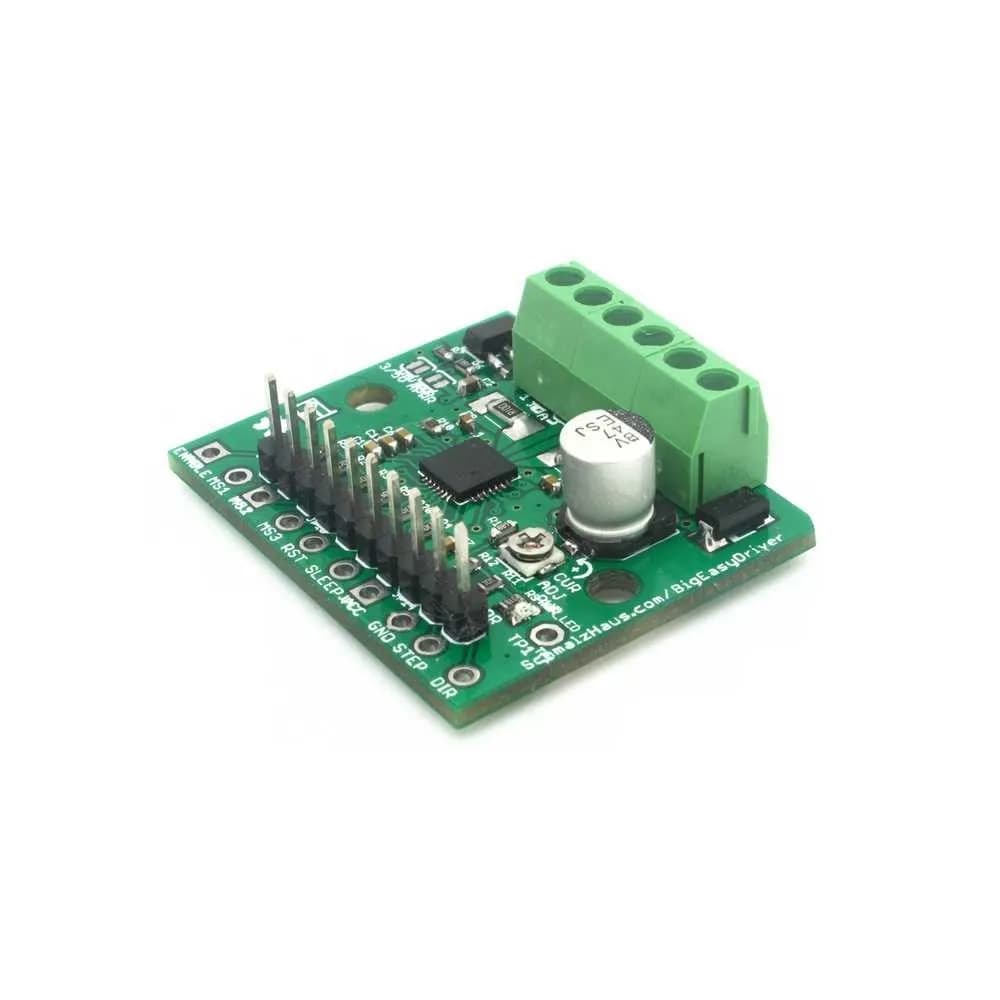
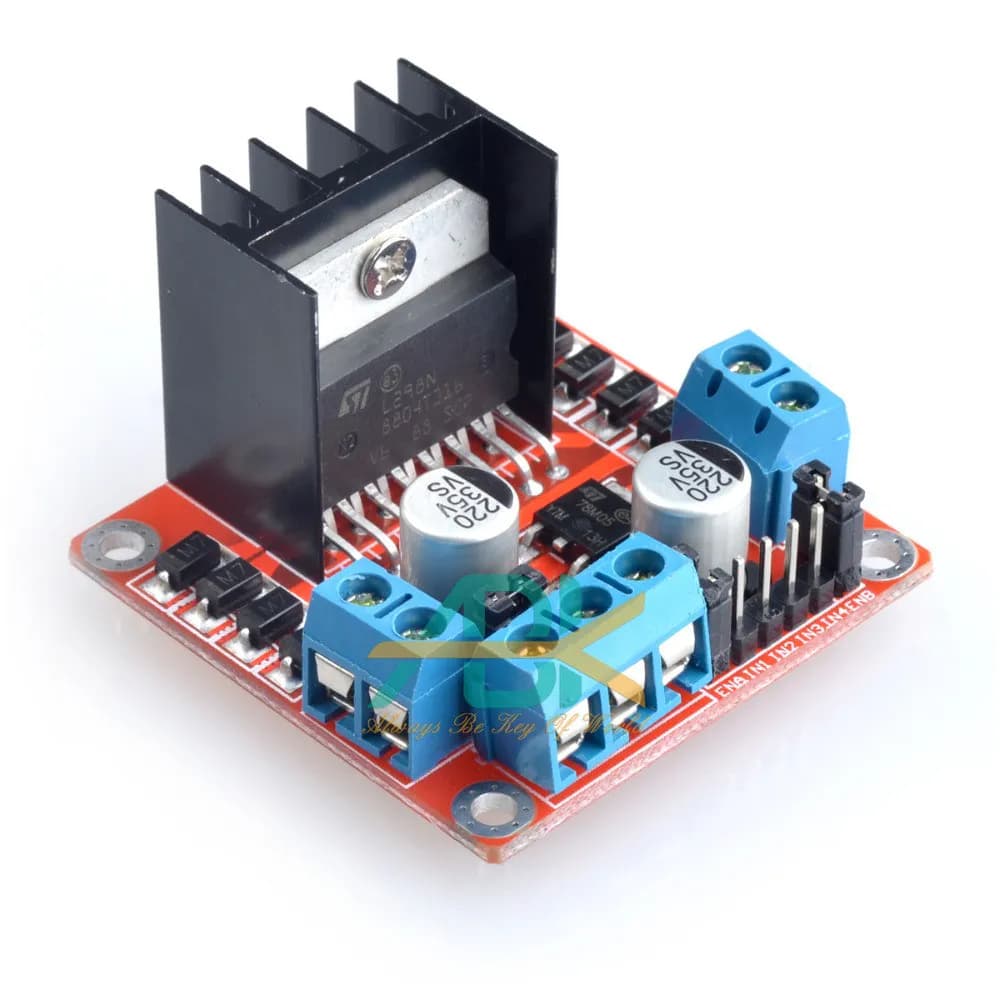
A DC motor draws its stall current at every start. A driver rated below that peak overheats or cuts out.
Gears, servos and motors FAQ
Divide the driven gear's teeth by the driving gear's teeth. A 12-tooth pinion driving a 36-tooth gear gives 36 / 12 = 3, written 3:1. Multiply the ratios of each stage for a gear train.
Multiply the load mass in kg by its distance from the shaft in cm: 200 g at 10 cm needs 0.2 × 10 = 2 kg·cm. Add the arm's own weight at half its length, then take a servo with 1.5× to 2× more.
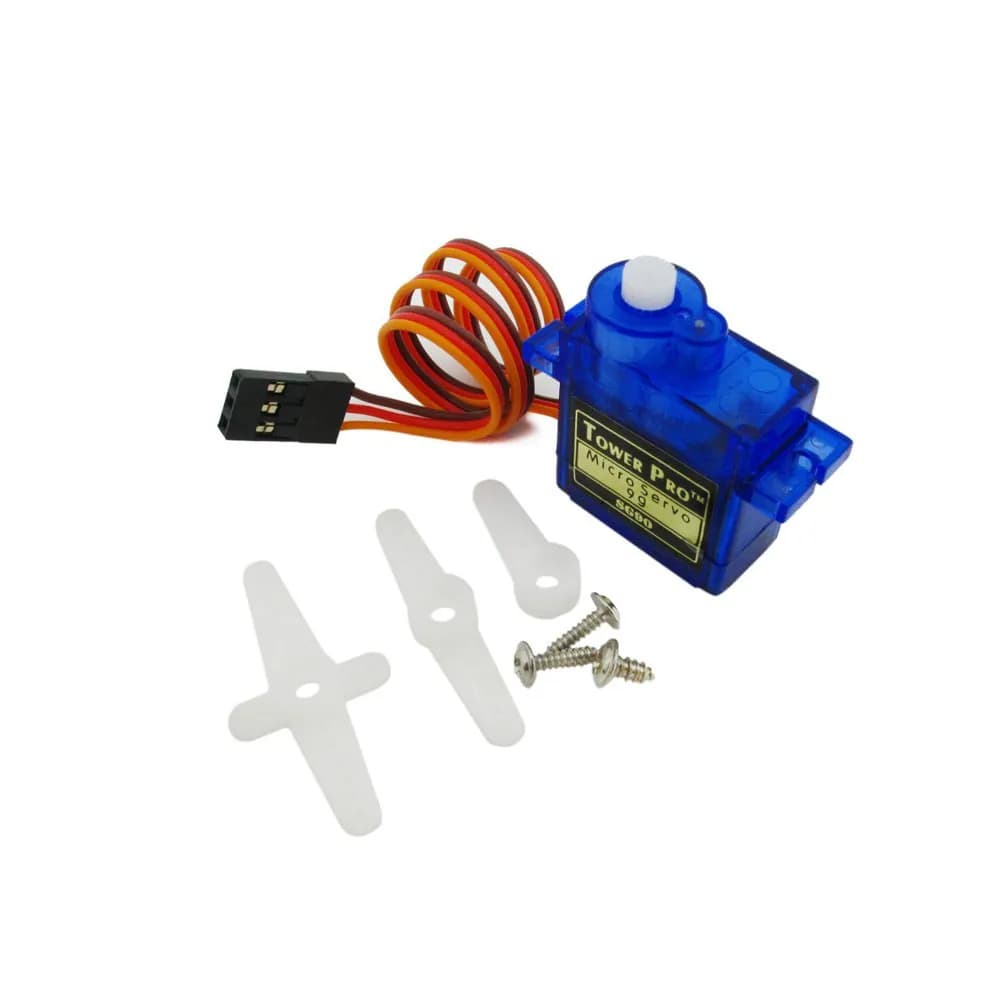
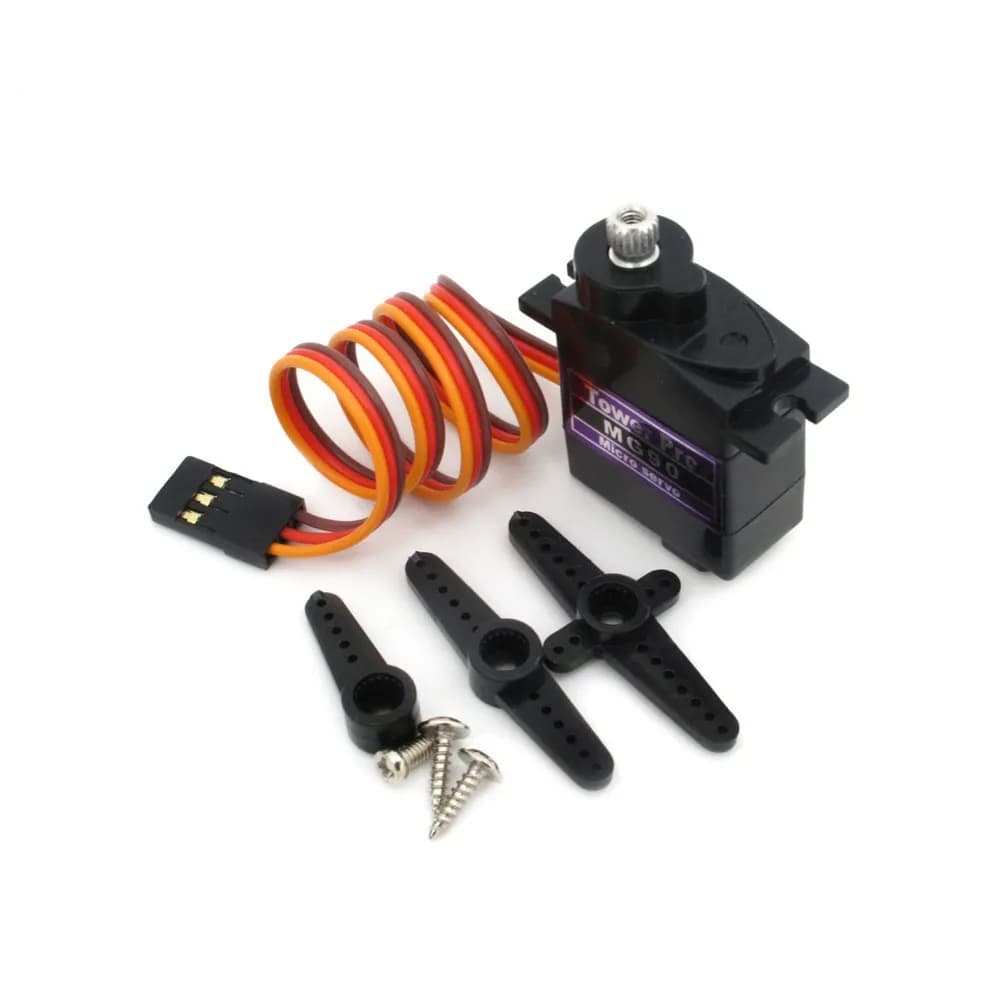
Only very close to the shaft. The SG90 stalls at about 1.8 kg·cm, so with a 1.5× margin it holds 200 g up to about 6 cm. For a longer arm use an MG996R (about 11 kg·cm).
Multiply by 0.0981: 1 kg·cm ≈ 0.098 N·m, and 1 N·m ≈ 10.2 kg·cm.
Steps per turn times microstepping, divided by the travel per turn. A 200-step NEMA 17 at 1/16 on a T8 screw (8 mm lead): 200 × 16 / 8 = 400 steps/mm. With a GT2 20-tooth pulley: 3200 / 40 = 80 steps/mm.
A brushed motor's speed falls in a straight line from its no-load speed to zero at its stall torque, while the current rises. At half the stall torque it gives its maximum power but runs hot.